
Chandigarh Municipal Corporation Launches Recycled Water Distribution Project Worth Rs.71.58 Crore

Chandigarh took a significant step towards sustainable water management as the municipal corporation initiated a ₹71.58-crore project to establish pipelines across the city for supplying recycled water. Within 18 months, all 1,800 parks, roundabouts, and industrial areas in Chandigarh will benefit from tertiary treated water for irrigation purposes.

With the aim of conserving potable and groundwater resources through wastewater recycling, the Chandigarh Municipal Corporation (MC) commenced the expansion of the tertiary treated water supply system across the city.

The project, inaugurated by UT administrator Banwarilal Purohit, witnessed the presence of city mayor Kuldeep Kumar Dhalor, UT adviser Rajeev Verma, local government secretary Nitin Kumar Yadav, and municipal commissioner Anindita Mitra. Estimated to save approximately 20 to 25 million gallons of potable water per day, the initiative will significantly contribute to groundwater conservation efforts.

Through tertiary treatment processes, sewage water undergoes chemical treatment and sedimentation, rendering it suitable for irrigation and related activities. This project aligns with the objectives of the City Water Action Plan (CWAP) to reduce reliance on ground and potable water sources.

UT administrator Banwarilal Purohit highlighted the project’s importance in conserving drinking water resources. Upgrading all six Sewage Treatment Plants (STPs) with Sequencing Batch Reactor (SBR) technology under the Smart City Mission has resulted in a notable improvement in the quality of tertiary treated water, addressing public concerns regarding foul odors.

City mayor Kuldeep Kumar elaborated on the initiative’s scope, emphasizing that all parks, green belts, road berms, and roundabouts in the city will receive treated water for irrigation purposes. Upon successful completion, recycled water will also be supplied to units in Industrial Area, Phase 1, and 2.

The Chandigarh Municipal Corporation’s endeavor marks a significant stride towards sustainable water management practices, ensuring the efficient utilization of water resources for the city’s development and environmental sustainability.

Commencing from the Industrial Area,
The Chandigarh Municipal Corporation (MC) is set to embark on a transformative initiative to usher in a greener and more water-efficient future for the city. Municipal Commissioner Anindita Mitra emphasized that this endeavor signifies a crucial milestone in Chandigarh’s quest for sustainability.

Previously, tertiary treated water was exclusively supplied from the Diggian Sewage Treatment Plant (STP). However, with the completion of this project, treated water will also be sourced from STPs in Raipur Kalan, 3BRD, and Maloya, broadening the scope of its distribution.

Entrusted to a private firm, the project is slated to span 18 months. The laying of pipelines will commence from the Industrial Area, facilitating the utilization of tertiary treated water in industries.

Initiated in 1990, the MC’s efforts to lay tertiary water pipelines initially covered Sectors 1 to 12 and 16. Over the decades, nearly 80% of the sectors have been encompassed. Currently, 10 million gallons per day (MGD) of treated water are utilized for maintaining parks, green belts, and fountains.

With plans to augment the supply to 20 MGD, the MC aims to enhance the consumption of tertiary treated water. This expansion will cater to the irrigation needs of all 1,800 parks in the city, along with providing treated water to under-construction public toilets.

In adherence to Water Bylaws, the MC mandated tertiary water connections for houses sized 500 square yards and above. While approximately 7,000 houses are eligible for such connections, around 2,000 remain uncovered.

Chandigarh, with a population of 1.26 million, currently consumes 386 million liters daily, equating to 245 liters per person per day (LPCD). Despite this, the daily consumption exceeds the estimated requirement, standing at 225 MLD or 150 LPCD, inclusive of 35% wastage.

In an incident during the inauguration event, where the sound system malfunctioned, Municipal Commissioner Anindita Mitra took swift action by suspending Executive Engineer Kuldeep Singh of the electrical department. Singh, responsible for fixing the system, failed to ensure its proper functioning, resulting in a delay. Mitra emphasized the importance of accountability, underscoring the need for adherence to protocols during such crucial events.

Chandigarh Municipal Corporation Launches Recycled Water Distribution Project Worth Rs.71.58 Crore Read More

“Google Issues Apology to Government Over Gemini’s Inconsistent Results on PM Modi”

NEW DELHI: American tech giant Google issued an apology to the government for the unsubstantiated comments made by its AI platform Gemini regarding PM Modi, acknowledging its platform as ‘unreliable,’ Minister of State for IT & Electronics Rajeev Chandrasekhar informed TOI.

“We had sent them a notice, seeking an explanation on the unsubstantiated results thrown up by Gemini regarding a particular query on PM Modi. They replied, stating, ‘Sorry, the platform is unreliable,'” the minister revealed, coinciding with the government’s announcement that AI platforms will now require a ‘permit’ to operate in the country. “That’s an inadequate response,” criticized the minister, highlighting a concerning trend among AI platforms offering ‘consumer solutions’ during trial phases.

The minister emphasized that India cannot serve as a testing ground for AI platforms, particularly as they face increasing global scrutiny for providing biased, misinformed, or unverified results. “AI data is being released from labs straight onto the public internet, without proper testing or safeguards. Then, when caught, they apologize, citing unreliability.”

Citing Google’s Gemini as an example, he stated, “Google Gemini is a prime example. They transitioned from the lab to the public internet without fear of consequences. And when confronted, they dismiss it, claiming the information is unreliable.”

The minister underscored that the Indian government will not permit underdeveloped platforms to offer full-fledged services without proper disclosures to users regarding potential misinformation or unlawfulness.
“We’ve made it clear that the Indian internet is not a testing ground. If you’re transitioning from the lab and it’s still unreliable, you must include a disclaimer. Users must be explicitly informed through consent forms and terms of use that this platform is under trial and may produce inaccurate or unlawful content.”

The minister emphasized that AI platforms cannot treat India as an extension of their research and development laboratories. “Indian internet and consumers cannot be considered mere testing grounds. Respect for Indian consumers, our digital citizens, is paramount. It is imperative for AI platforms to explicitly warn Indian users about potential errors, unreliability, and inaccuracies in their platforms. Users must be fully aware and informed before engaging with such platforms.”


Furthermore, the minister highlighted the legal repercussions for AI platforms found violating Indian IT and criminal laws.
“The Indian legal framework, including the IT Act and IT Rules, clearly delineates 12 types of unlawful content. If AI platforms generate such unlawful content, they cannot claim unreliability as a defense. Prosecution will ensue.”

The minister condemned Gemini’s dissemination of unverified and unsubstantiated results as “reckless, irresponsible, and disrespectful” towards Indian consumers. “Taking Indian digital citizens for granted will not be tolerated, and appropriate measures will be taken to address such behavior.”

The government’s recent advisory for AI-led startups underscores the importance of labeling unverified information as potentially false and error-prone. This advisory follows a previous notice issued nearly two-and-a-half months ago regarding deepfakes, in response to numerous instances of synthetically-generated content infiltrating social media and online platforms.

“Google Issues Apology to Government Over Gemini’s Inconsistent Results on PM Modi” Read More

Meet Suman Kumari: BSF’s First Woman Sniper Among 56 Male Counterparts

Meet Suman Kumari, the first woman sniper of the Border Security Force (BSF), who has made history by completing an eight-week sniper course at the Central School of Weapons and Tactics (CSWT) in Indore, achieving the prestigious ‘instructor grade’.

Suman’s journey to becoming a sniper began when she volunteered for the course after witnessing the looming threat of sniper attacks from across the border while commanding a platoon in Punjab. Encouraged by her determination, her superiors approved her participation in the course.

Despite being the only female among 56 male counterparts in the sniper course, Suman’s resilience and dedication shone through, earning her the distinction of being BSF’s first ‘Mahila Sniper’. Her achievement marks a significant milestone for gender inclusivity within the BSF and is expected to inspire other female recruits to pursue similar military roles.


In an interview with The Times of India, CSWT IG Bhaskar Singh Rawat emphasized the rigorous nature of the sniper course, ranking it among the toughest after commando training. Rawat praised Suman’s accomplishment and revealed that she is now eligible to serve as a sniper instructor.

Highlighting Suman’s exceptional performance during the course, one of her instructors emphasized the demanding physical and mental strength required for sniper training. Despite the challenges, Suman’s unwavering determination and eagerness to learn set her apart, leading her to excel in various activities throughout the course.

Hailing from Mandi district in Himachal Pradesh, Suman hails from a modest background, with her father working as an electrician and her mother as a homemaker. Her remarkable journey from humble beginnings to becoming BSF’s first woman sniper serves as a testament to her grit, perseverance, and dedication to serving her country.

Meet Suman Kumari: BSF’s First Woman Sniper Among 56 Male Counterparts Read More

Five Hospitalized After Consuming Dry Ice Mistaken for Mouth Freshener at Gurgaon Restaurant

Five patrons of a restaurant in Gurgaon endured mouth burns and vomiting, necessitating hospitalization, after inadvertently ingesting dry ice served as mouth freshener by mistake. The incident occurred at Laforestta Cafe in Sector 90, where a waitress erroneously presented translucent granules, thinking they were mouth fresheners, to commemorate a birthday celebration.

Dry ice, commonly employed for theatrical effects in dining establishments and bars, is solidified carbon dioxide that poses health hazards when consumed, as it transitions into a gaseous state.

Last Saturday, three couples, Ankit Kumar with his wife Neha, Manika Goenka with his wife Pritika Rastogi, and Deepak Arora with his wife Himani, gathered at the cafe to observe Manika’s birthday. Following their meal, the waitress provided the group with what they presumed to be mouth fresheners. However, upon ingestion, the granules caused severe tongue and palate burns, prompting three of the individuals to be admitted to Aarvy Hospital.

Ankit Kumar, the complainant, recounted the distressing experience, stating that as the group consumed the granules, they immediately experienced a burning sensation, leading to vomiting and bleeding. Despite seeking aid from the restaurant staff, assistance was not forthcoming until police intervention, approximately 40 minutes later.

A subsequent investigation revealed that the waitress had inadvertently confused the dry ice pouch for mouth fresheners. Inspector Manoj stated, “We have seized the samples of dry ice and sent them for forensic analysis to ascertain why the restaurant had dry ice and how the waitress mistook it for a mouth refreshment item.”

The incident resulted in the filing of an FIR against the waitress under IPC sections 328 (causing hurt by means of poison) and 120B (criminal conspiracy). Laforestta Café manager Gagan acknowledged the error, attributing it to a mistake by the waitress and emphasizing the restaurant’s cooperation with authorities.

Dry ice, while commonly utilized for visual appeal and food preservation, poses substantial risks if ingested, potentially causing burns to the mouth, esophagus, and stomach. Restaurants and bars often use dry ice separately for specific dishes, primarily for dramatic effects and cooling purposes.

Five Hospitalized After Consuming Dry Ice Mistaken for Mouth Freshener at Gurgaon Restaurant Read More

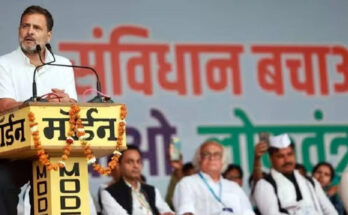
Rahul Gandhi Claims India Faces Maximum Unemployment in 40 Years, Blames Modi for Small Business Demise

During the Bharat Jodo Nyay Yatra in Madhya Pradesh’s Gwalior, former Congress chief Rahul Gandhi made striking claims regarding India’s unemployment crisis. Gandhi emphasized that India’s unemployment rate is twice that of Pakistan, standing at 23 percent compared to Pakistan’s 12 percent. He further underscored that the number of unemployed youth in India surpasses those in neighboring countries like Bangladesh and Bhutan.

Gandhi attributed this alarming disparity to the policies of Prime Minister Narendra Modi, particularly the rollout of GST and demonetization, which he argued adversely impacted small businesses and consequently led to a surge in unemployment across the nation.

“The number of unemployed youth in our country exceeds those in Bangladesh and Bhutan,” Gandhi stated, expressing concern over India’s highest unemployment rate in the last four decades. He squarely placed the blame on PM Modi, accusing him of effectively “finishing” small businesses through demonetization and GST implementation, thereby exacerbating the unemployment crisis.

Gandhi’s remarks during the yatra highlighted the pressing economic challenges facing India, as well as the need for policy reforms to address unemployment and foster economic growth.

During his Bharat Jodo Nyay Yatra in Gwalior, Rahul Gandhi engaged with Agniveers and ex-servicemen, shedding light on economic disparity, social inequality, and the mistreatment of farmers and young people. Gandhi attributed the incorporation of ‘nyay’ into the yatra’s name to the pervasive injustice faced by these segments of society and the growing spread of “hatred” across the country.

Addressing a public gathering during the yatra, Gandhi reiterated his assertion regarding India’s alarming unemployment situation. He emphasized that India’s unemployment rate is double that of Pakistan, standing at 23 percent compared to Pakistan’s 12 percent. Gandhi further highlighted the concerning fact that the number of unemployed youth in India exceeds those in neighboring countries like Bangladesh and Bhutan.

Pointing fingers at Prime Minister Narendra Modi, Gandhi blamed him for the dire state of unemployment, citing policies like demonetization and GST implementation, which he claimed adversely affected small businesses and exacerbated the unemployment crisis.

Throughout his yatra, Gandhi’s interactions underscored the urgent need for addressing systemic injustices and fostering inclusive growth to tackle pressing socio-economic challenges facing the nation.

Rahul Gandhi Claims India Faces Maximum Unemployment in 40 Years, Blames Modi for Small Business Demise Read More

IBM Encourages Employees to ‘Raise Your Hand’ for Voluntary Layoffs

In a move characterized as “transformative,” IBM is urging its employees to proactively volunteer for layoffs as the company embarks on another round of global job cuts.

During a recent Q4 earnings call, IBM introduced the term ‘resource action’ to signify its ongoing restructuring efforts. According to reports, the company aims to streamline its operations, particularly targeting positions in Europe.

IBM’s Chief Financial Officer, James Kavanaugh, revealed that the company is striving to achieve a savings goal of $3 billion annually by the end of 2024, representing a substantial increase from its original target.

Reports indicate that a significant portion of the reduction target is focused on Enterprise Operations & Support (EO&S), Q2C missions, and Finance & Operations.

While approximately 50% of the reduction goal will impact staffing levels across Europe, IBM is emphasizing voluntary redundancy over involuntary terminations for employees who wish to remain.

An IBM spokesperson clarified, “In 4Q earnings last month, IBM disclosed a workforce rebalancing charge that would represent a very low single-digit percentage of IBM’s global workforce, and we expect to exit 2024 at roughly the same level of employment as we entered with.”

The spokesperson further explained, “This rebalancing is driven by increases in productivity and our continued push to align our workforce with the skills most in demand among our clients, especially areas such as AI and hybrid cloud.”

The initiative underscores IBM’s commitment to optimizing its workforce while aligning with evolving market demands, particularly in fields like artificial intelligence (AI) and hybrid cloud technology.

IBM Encourages Employees to ‘Raise Your Hand’ for Voluntary Layoffs Read More

Jhalak Dikhhla Jaa11 Finale: Manisha Rani Clinches Victory with Trophy and ₹30 Lakh Prize -“Overflowing Gratitude”

Former Bigg Boss contestant Manisha Rani clinched the coveted title of the dancing reality show Jhalak Dikhhla Jaa 11 during the thrilling finale held on Saturday night. Alongside the trophy, Manisha also bagged a substantial prize of ₹30 Lakh and an exciting trip to Yas Islands, Abu Dhabi. Entering the competition as a wildcard contestant, Manisha teamed up with choreographer Ashutosh Pawar, showcasing stellar performances throughout the season.

In a heartfelt Instagram post, Manisha expressed her gratitude towards her fans for their unwavering support. She wrote, “DREAMS DO COME TRUE. Today, words fall short to praise you all… A small-town girl from Bihar dared to dream big!! And to fulfill that dream, the entire nation came together… Thank you to everyone who showered me with love throughout my journey on Jhalak and ensured that the trophy finds its way into my hands. What can I say about your praises? You’ve become our life.”


View this post on Instagram


A post shared by Manisha Rani (@manisharani002)


Competing against talented contenders such as Shoaib Ibrahim, Adrija Sinha, Sreerama Chandra, and Dhanashree Verma, Manisha’s victory was a testament to her dedication and skill. The judging panel, comprised of Malaika Arora, Farah Khan, and Arshad Warsi, praised her exceptional performances, ultimately leading to her triumph.

Hosted by the dynamic duo of Rithvik Dhanjani and Gauahar Khan, Jhalak Dikhhla Jaa 11 captivated audiences with its electrifying dance routines and fierce competition, making it a memorable season for participants and viewers alike.

Jhalak Dikhhla Jaa11 Finale: Manisha Rani Clinches Victory with Trophy and ₹30 Lakh Prize -“Overflowing Gratitude” Read More

US military aircraft airdrop thousands of meals into Gaza in emergency humanitarian aid operation.

US military C-130 cargo planes dropped food in pallets over Gaza on Saturday in the opening stage of an emergency humanitarian assistance authorized by President Joe Biden after more than 100 Palestinians who had surged to pull goods off an aid convoy were killed during a chaotic encounter with Israeli troops. Three planes from Air Forces Central dropped 66 bundles containing about 38,000 meals into Gaza at 8:30 am EST (3:30 pm local).

The bundles were dropped in southwest Gaza, on the beach along the territory’s Mediterranean coast. The airdrop was coordinated with the Royal Jordanian Air Force, which said it had two food airdrops Saturday in northern Gaza and has conducted several rounds in recent months.

“The amount of aid flowing to Gaza is not nearly enough and we will continue to pull out every stop we can to get more aid in,” President Joe Biden said Saturday in a post on the social media site X, formerly known as Twitter.

US Central Command said on X that “the combined operation included US Air Force and RJAF C-130 aircraft and respective Army Soldiers specialized in aerial delivery of supplies, built bundles and ensured the safe drop of food aid.”

The US airdrop is expected to be the first of many.

Three Biden administration officials said the planes dropped the military Meals Ready to Eat (MREs) – shelf-stable meals that contain a day’s worth of calories in each sealed package – in locations that were thought would provide civilians with the greatest level of safety to access aid. Afterward, the US monitored the sites and was able to see civilians approach and distribute food among themselves, according to the officials, who spoke on the condition of anonymity to provide additional details that had not been made public.

Biden on Friday announced the US would begin air dropping food to starving Gazans after at least 115 Palestinians were killed and hundreds more wounded in the Thursday attack as they scrambled for aid, the Health Ministry in Hamas-ruled Gaza said.

Amidst the chaos, hundreds of people rushed towards approximately 30 trucks delivering aid in the predawn hours to the north. Palestinians alleged that nearby Israeli troops fired into the crowds. However, Israel countered, stating they fired warning shots towards the crowd and contended that many of the deceased were trampled in the ensuing commotion.

White House national security spokesperson John Kirby addressed the situation on Friday, emphasizing that the airdrops were meticulously planned to provide emergency humanitarian assistance safely to those on the ground. The United States views these airdrops as crucial in alleviating the dire conditions in Gaza. However, Kirby emphasized that while airdrops have their advantages in speed, they cannot replace the effectiveness of trucks in transporting larger volumes of aid. Thursday’s events underscored the risks associated with ground transport.

The C-130 aircraft, widely employed for delivering aid to remote locations, boasts the capability to land in austere environments. With a capacity to airlift up to 42,000 pounds of cargo, its crews are adept at rigging cargo, including vehicles, onto massive pallets for safe air drops. Air Force loadmasters secure these bundles onto pallets with netting, rigged for release from the aircraft’s rear, with parachutes deployed to ensure safe delivery upon reaching the designated drop zone.


The versatility of the Air Force’s C-130 has been demonstrated in past humanitarian efforts, including missions to Afghanistan, Iraq, Haiti, and other locations. Notably, it plays a crucial role in the annual “Operation Christmas Drop,” a multinational effort delivering pallets of toys, supplies, nonperishable food, and fishing gear to remote areas in the Federated States of Micronesia and the Republic of Palau.

Since the onset of the conflict on October 7, Israel has enforced strict limitations on the entry of food, water, medicine, and other supplies into Gaza, with only a trickle of aid permitted through the Rafah crossing from Egypt and Israel’s Kerem Shalom crossing.

The United Nations has sounded the alarm, stating that one-quarter of Gaza’s 2.3 million inhabitants are facing starvation. Aid officials caution that while airdrops serve as a last resort in distributing aid, they are not an efficient means of addressing the crisis.

US military aircraft airdrop thousands of meals into Gaza in emergency humanitarian aid operation. Read More

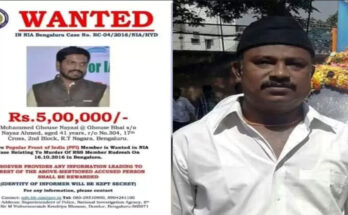
Alleged Assassination of RSS Leader, Most Wanted Mohammad Gaus Apprehended in South Africa by NIA

Mohammad Gaus Arrested: Mohammad Gaus, the alleged perpetrator of the assassination of Rashtriya Swayamsevak Sangh (RSS) leader Rudresh in 2016, has been apprehended in South Africa and deported to India, where he is being brought to Mumbai.

Most Wanted Mohammad Gaus Niyazi:
Central investigative agencies have achieved a significant breakthrough on foreign soil. The suspect accused of the murder of RSS leader Rudresh and a terrorist associated with the Popular Front of India (PFI), Mohammad Gaus Niyazi, has been captured by the agencies. This terrorist was apprehended in South Africa.

NIA had announced a reward of 5 million rupees on Mohammad Gaus, who was a prominent face of the Popular Front of India in India. Additionally, he was also accused of the murder of RSS leader Rudresh in Bengaluru in 2016. After the assassination, he had gone into hiding and had been staying in different countries.

Gujarat ATS Tracked Location:
Initially, Gujarat Anti-Terrorism Squad (ATS) tracked his location, and this information was passed on to the central agencies. Subsequently, he was captured in South Africa and deported to India. Currently, he is being taken to Mumbai.

NIA Investigating RSS Leader’s Assassination:
The investigation into the assassination of RSS leader Rudresh is being conducted by the NIA. Rudresh was brutally murdered during broad daylight. After participating in the organization’s program and returning home, he was attacked by assailants in Shivaji Nagar, Bengaluru. He succumbed to his injuries during this attack.

In this case, the police had arrested four individuals within a few weeks, most of whom were around the age of thirty. The main suspect, 40-year-old Ajim Sharif, was apprehended by the police in November 2016.

What did the NIA say?
After investigating the case, the NIA stated, “The murder was perpetrated with the intention of instilling terror among certain groups of people, and it was clearly a terrorist act, carried out on October 16 by using a lethal weapon to brutally murder the uniformed RSS member in broad daylight.”

Alleged Assassination of RSS Leader, Most Wanted Mohammad Gaus Apprehended in South Africa by NIA Read More

Suspected Smuggler Killed in BSF Firing Near Indo-Bangla Border in Meghalaya

A suspected sugar smuggler was shot dead by security forces in Meghalaya near the Indo-Bangladesh border, with his accomplice injured in the firing.

Security forces in Meghalaya allegedly shot dead a suspected sugar smuggler while his accomplice was injured in firing near the Indo-Bangladesh international border, officials reported on Saturday. The incident occurred on March 1 when Asen M Marak, in his mid-forties, was killed in firing from the BSF Meghalaya Frontier.

Authorities are currently determining the identity and whereabouts of the injured accomplice, believed to have been hit in the leg, according to officials.

Confirming the incident, Sohra sub-divisional officer (Civil) Salon Verma stated that the matter is under inquiry and all formalities are being followed. She mentioned, “I will personally conduct the inquest after the investigating team returns to the base with all relevant information gathered. The postmortem will be conducted here in Sohra, and thereafter, the law will take its course towards a logical conclusion.”

The incident took place at Dalia village near Shella in Meghalaya’s East Khasi Hills district around 8 pm when a BSF posse on duty encountered a group of individuals allegedly attempting to smuggle sugar, onions, and other materials to Bangladesh.

Providing preliminary details, a senior BSF officer stated that while such incidents are frequent, this one differed as approximately 300 people from both sides of the international border gathered at the site and confronted the BSF team. After exhausting all legal measures to control the crowd, the BSF team resorted to two rounds of firing, resulting in Marak’s death.

“Almost 300 people from both sides of the border converged at the site to confront the BSF personnel. While a group engaged with the BSF personnel, another group quickly took the contraband to remove any evidence of smuggling along with the person who was alive then, to the village where he succumbed to his injuries,” explained the officer.

Despite initially using non-lethal measures such as chilli grenades, stun grenades, and a pump action gun to deter the aggressive crowd, the situation escalated as the crowd attacked the team with machetes, knives, and other weapons. The team fired once in the air and subsequently fired again, resulting in the injury of two persons. Marak was rushed to the hospital but succumbed to his injuries.

“As per convention, unlike the western border, there is a treaty wherein non-lethal measures will be first adopted in cases of border confrontation or skirmishes, and the team had to resort to the last resort to save themselves,” added the officer.


Suspected Smuggler Killed in BSF Firing Near Indo-Bangla Border in Meghalaya Read More