
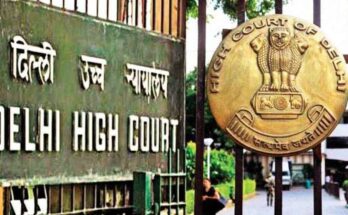
“Delhi High Court Raises Income Limit for EWS Admissions in Schools to Rs 2.5 Lakh”
The Delhi High Court has revised the annual income limit for school admissions in Delhi under the Economically Weaker Section (EWS) category to Rs 2.5 lakh. This decision follows a petition filed by the Directorate of Education (DOE) challenging a previous ruling by Justice Kaurav. The court emphasized the need for the government to consider the beneficiaries’ living standards, highlighting Delhi’s comparatively lower threshold compared to other states.
NEW DELHI: On Tuesday, the Delhi High Court revised its previous order regarding the annual income limit for admissions to Delhi schools under the Economically Weaker Section (EWS) category.
During the hearing, a division bench led by acting Chief Justice Manmohan increased the existing threshold from Rs 1 lakh to Rs 2.5 lakh. The court considered a petition filed by the Delhi government’s Directorate of Education (DOE), contesting a December 14 ruling issued by a bench headed by Justice Purushaindra Kumar Kaurav.
Justice Kaurav’s ruling suggested raising the current income threshold for EWS reservation in the city to Rs 5 lakh until the Delhi government revises the threshold. The court urged the government to set the threshold at a level commensurate with the living standards of the intended beneficiaries.
The judge argued that the current threshold fails to accurately reflect the economic challenges faced by families today. Delhi’s requirement was notably lower compared to the Rs 8 lakh annual threshold adopted by most states.
According to the Delhi School Education (Free Seats for Students Belonging to Economically Weaker Sections and Disadvantaged Group) Order, 2011, children whose parents earn less than Rs 1 lakh per year and have resided in the Capital for the past three years are eligible for admission under the EWS quota. During Tuesday’s proceedings, the DOE, represented by standing counsel Santosh Kumar Tripathi, expressed concerns that the sudden increase in the threshold could negatively impact labor candidates earning Rs 1 lakh. Additionally, it could undermine the fundamental right to free and compulsory education guaranteed by Article 21A of the Constitution.
Media reports indicate that Tripathi further argued that the current admission system in the EWS category, based on parents’ self-declaration of income, was sufficient and did not require any alterations. He also contended that the government was unable to comply with the single judge’s directives as the admission process had already begun in November.
Moreover, the court stated that the ruling would remain in effect until changes were made to the 2011 reservation scheme. The Delhi School Education (Free Seats for Students Belonging to Economically Weaker Sections and Disadvantaged Group) Order, 2011, mandates schools in Delhi to reserve at least 25% of Class 1 seats for students from the EWS category. This order also ensures that these students receive free and compulsory elementary education in accordance with the Right to Education Act.
“Delhi High Court Raises Income Limit for EWS Admissions in Schools to Rs 2.5 Lakh” Read More