Indian Security Agencies Intercept Pakistan-Bound Ship from China Carrying ‘Military-Grade Items’

Indian security agencies have intercepted a Pakistan-bound ship from China at Mumbai’s Nhava Sheva port over suspicions of a ‘dual-use consignment’ intended for Pakistan’s nuclear and ballistic missile program. Among the items seized was a Computer Numerical Control (CNC) machine manufactured by an Italian company. A team from the Defence Research and Development Organisation (DRDO) also inspected the consignment.

The interception took place based on intelligence input, leading customs officials to halt the Malta-flagged merchant ship, CMA CGM Attila, en route to Karachi on January 23 at the port. The consignment, including the CNC machine, underwent scrutiny by DRDO, which certified its potential use in manufacturing critical parts for Pakistan’s missile development program.

There have been concerns regarding Pakistan’s potential exploitation of China as a conduit to acquire restricted items from Europe and the US while masking identities to evade detection.

Documents such as bills of loading indicated the consigner as “Shanghai JXE Global Logistics Co Ltd” and the consignee as “Pakistan Wings Pvt Ltd” of Sialkot. However, further investigation revealed that the 22,180-kilogram consignment was shipped by Taiyuan Mining Import and Export Co Ltd, intended for Cosmos Engineering in Pakistan.

Port officials, acting on specific intelligence, alerted Indian defence authorities, leading to the inspection and subsequent seizure of the cargo. This seizure falls within the purview of preventing potential proliferation by Pakistan and China.

CNC machines, operated by computers, offer enhanced efficiency, consistency, and accuracy, making them valuable assets with applications in both civilian and military domains. Since 1996, CNC machines have been included in the Wassenaar Arrangement—an international arms control regime aimed at curbing the proliferation of equipment with dual civilian and military uses. India, among the 42 member countries, actively participates in exchanging information on transfers of conventional weapons and dual-use goods and technologies.

And therefore, Indian port officials have previously seized similar dual-use military-grade items being shipped from China to Pakistan. In February 2020, China attempted to supply an autoclave to Pakistan under the guise of an “industrial dryer.”

Moreover, Cosmos Engineering, a Pakistani defence supplier, has been under scrutiny since March 12, 2022, when Indian authorities intercepted a shipment of Italian-made thermoelectric instruments, once again at the Nhava Sheva port.

Furthermore, in June 2023, the US Bureau of Industry and Security (BIS) imposed sanctions on three Chinese companies—General Technology Limited (autoclave supplier to Pakistan), Beijing Luo Luo Technology Development, and Changzhou Utek Composite Company—for their involvement in supplying missile-applicable items to Pakistan’s ballistic missile programme.


Indian Security Agencies Intercept Pakistan-Bound Ship from China Carrying ‘Military-Grade Items’ Read More

Xiaomi Enters the Electric Vehicle Market: Unveils First EV as Smartphone Giant Diversifies into Automobile Industry

Chinese technology giant Xiaomi has introduced its inaugural electric vehicle, the SU7 sedan, at the Mobile World Congress 2024 in Barcelona. Although Xiaomi initially revealed the EV in China last December, the MWC event marks its global debut.

We had the opportunity to closely examine the Aqua Blue SU7 on the exhibition floor, and it’s truly impressive. Drawing inspiration from supercars like the McLaren 750S, the vehicle features striking headlights and LED accents. The rear design is notable for its sleek wraparound taillights connected by an LED strip, lending the sedan a futuristic appearance. Higher trim levels will boast additional features such as an active rear wing and lidar sensors, complemented by 19 and 20-inch wheels, giving the SU7 a sporty allure.

While the interior was somewhat obscured by tinted windows, Xiaomi has previously showcased a minimalist cabin design centered around a large touchscreen devoid of physical buttons.

The SU7 will be offered with a choice of battery packs. The standard 73.6 kWh battery offers an impressive range of 668 km, while the higher-end 101 kWh battery extends the range to 800 km on a single charge. Customers can also choose between rear-wheel drive with a 299 PS motor or a more powerful 673 PS dual-motor all-wheel-drive configuration.

Although Xiaomi is renowned for its affordable smartphones and gadgets, the company has emphasized that the SU7 will compete in the premium segment, targeting established players like Porsche. It remains to be seen if Xiaomi can succeed in this ambitious endeavor within the fiercely competitive Chinese market. However, Xiaomi’s expansion into diverse product categories, including lifestyle devices and home appliances, is well-documented. In 2021, the company announced a $10 billion investment in electric vehicles over the next decade, with the SU7 sedan being the first outcome of this initiative.

In addition to its performance and range, the SU7 comes equipped with an array of high-tech features such as adaptive cruise control, parking assistance, entertainment screens, a 25-speaker system, and various connectivity options.

While initial SU7 sales will commence in China, with deliveries expected to begin in the second quarter, the SU7 showcased at MWC 2024 could potentially pave the way for exports to global markets like India in the future.

Xiaomi Enters the Electric Vehicle Market: Unveils First EV as Smartphone Giant Diversifies into Automobile Industry Read More

GDP Surges at 8.4% in December Quarter; PM Narendra Modi Applauds Indian Economy’s Strength and Potential

The most recent government data reveals that India’s GDP soared by 8.4% in the October-December quarter, a significant leap from 4.3% in the corresponding period last year.

Prime Minister Narendra Modi, responding to the data unveiled by the government, took to the social media platform X to express his sentiments on Thursday regarding India’s economic performance in the December quarter.

“Recording a robust 8.4% GDP growth in Q3 2023-24 underscores the resilience and potential of the Indian economy. Our steadfast efforts will persist in fostering rapid economic expansion, ensuring a better quality of life for the 1.4 billion Indians and nurturing a developed India!” the Prime Minister shared on X.

The latest data from the National Statistical Office (NSO) indicates that the GDP expanded by 8.4% in the October-December quarter of 2023, compared to a growth rate of 4.3% in the same quarter of 2022.

In the third quarter of this fiscal year, the manufacturing sector exhibited notable growth, with its output, as measured by gross value added, escalating by 11.6%, contrasting sharply with a contraction of 4.8% witnessed in the corresponding period of the previous year.

According to a government statement, “The real GDP, or GDP at Constant (2011-12) Prices, for the year 2023-24 is projected to reach ₹172.90 lakh crore, surpassing the first revised GDP estimates for 2022-23, which stood at ₹160.71 lakh crore. The GDP growth rate for 2023-24 is estimated at 7.6%, compared to the 7.0% growth recorded in 2022-23.”

The statement further notes that the GDP at current prices in the third quarter of 2023-24 is estimated at ₹75.49 lakh crore, reflecting a growth rate of 10.1%, as opposed to ₹68.58 lakh crore recorded in the third quarter of 2022-23.

Additionally, the NSO has revised downward the GDP growth estimate for 2022-23 to 7% from the earlier projection of 7.2%.

Furthermore, GDP estimates for the first and second quarters of the current fiscal have been revised upward to 8.2% and 8.1%, respectively, from 7.8% and 7.6%.

Overall, the economy has expanded by 8.2% during April-December 2023, compared to 7.3% growth observed in the corresponding period of the previous year.

GDP Surges at 8.4% in December Quarter; PM Narendra Modi Applauds Indian Economy’s Strength and Potential Read More

PM Kisan Yojana: Modi Government’s Holi Gift to Farmers, Transfers Rs21,000 Crore to Bank Accounts

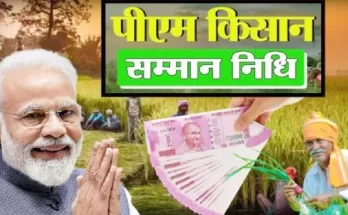
PM Kisan Nidhi Yojana 16th Installment: Prime Minister Narendra Modi has announced a significant gift to farmers just ahead of Holi. During a program held in Yavatmal district of eastern Maharashtra, funds were distributed under the PM Kisan Samman Nidhi Yojana. Under this scheme, the Modi government directly transferred over Rs. 21,000 crore to the bank accounts of farmers, benefiting more than nine crore beneficiaries. Modi assured, “This is Modi’s guarantee.”

New Delhi: PM Kisan 16th Installment 2024: Prime Minister Narendra Modi has given a big gift to farmers before Holi. During an event organized in Yavatmal district of eastern Maharashtra, he distributed funds under the PM Kisan Samman Nidhi Yojana. Under this, the Modi government released the 16th installment of the PM Kisan Samman Nidhi Yojana and transferred over Rs. 21,000 crore to farmers’ accounts, benefiting more than 11 crore farmer families, surpassing the total transfer of over three lakh crore rupees.

During this, the PM said, “Today, with just one click, over nine crore beneficiary farmers have received over Rs. 21,000 crore directly into their bank accounts, and this is Modi’s guarantee.”

PM Targets Sharad Pawar on Farmers’ Issue He launched an attack on former Union Minister Sharad Pawar and said that when he (Pawar) handled the agriculture department (during the Congress-led UPA government from 2004 to 2014), announcements of financial packages were made for farmers, but the funds were diverted elsewhere before reaching the beneficiaries.

Referring to a statement made by former Prime Minister Rajiv Gandhi in the 1980s, Modi commented that during Congress governments, when one rupee was released from the central government for welfare schemes, only 15 paisa reached the intended beneficiaries (PM Kisan Beneficiaries). But our government is committed to serving the people.


PM Narendra Modi said, “If today the Congress government was in power, out of the Rs. 21,000 crore distributed under the PM Kisan Samman Nidhi Yojana in Yavatmal, Rs. 18,000 crore would have been looted in between. But under the BJP government, the poor are getting their full rights.”

Modi Government Committed to Farmer Welfare:
Amit Shah Meanwhile, Union Home Minister Amit Shah said on Wednesday that the Narendra Modi government is committed to the welfare of farmers. Under the ‘Pradhan Mantri Kisan Samman Nidhi’ scheme, more than three lakh crore rupees have been directly deposited into the accounts of farmers.

Farmers Receive Rs. 6,000 Benefit:
Every Year It is worth mentioning that the Pradhan Mantri Kisan Samman Nidhi Yojana is a central scheme in which the Indian government contributes one hundred percent. This scheme has been in operation since December 2018. Under this scheme, farmers with land receive Rs. 6,000 annually in three equal installments. This amount is directly transferred to their bank accounts.

PM Kisan Yojana: Modi Government’s Holi Gift to Farmers, Transfers Rs21,000 Crore to Bank Accounts Read More

Tamil Nadu Minister Releases Ad for ISRO, Features Chinese Flag on Missile Instead of Indian

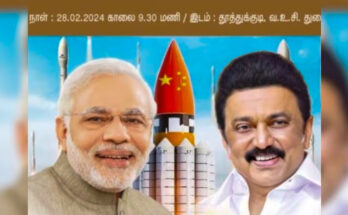
An advertisement promoting a new spaceport operated by the Indian Space Research Organisation (ISRO) in Tamil Nadu has sparked controversy after featuring a rocket adorned with the flag of China, leaving the state government embarrassed.

The advertisement, reportedly issued by State Fisheries Minister Anita Radhakrishnan, was meant to commemorate Prime Minister Narendra Modi laying the foundation stone for the ISRO spaceport in Kulasekarapattinam. It aimed to highlight the efforts of former Chief Minister Karunanidhi and his son, current Chief Minister MK Stalin, in bringing the project to fruition.

However, the ad unintentionally displayed a computer-generated rocket with the Chinese national flag, leading to criticism from the Bharatiya Janata Party (BJP) directed at the ruling Dravida Munnetra Kazhagam (DMK).

Prime Minister Modi, taking a jab at the DMK, accused the party of appropriating credit for projects initiated by the BJP-led Centre. “DMK is a party that takes credit for work it hasn’t done. Everyone knows they put their stickers on our schemes. Now, they’ve gone too far by affixing Chinese stickers to claim credit for the ISRO launch pad in Tamil Nadu,” PM Modi stated at a rally in Tirunelveli.

“They refuse to acknowledge India’s space advancements, and with taxpayers’ money, they advertise without even featuring India’s space achievements,” he added. BJP state president K Annamalai also condemned the ad, which appeared in local newspapers, and accused the DMK of showing “disregard for our country’s sovereignty.”

“This advertisement… reflects the DMK’s allegiance to China. The DMK, steeped in corruption, has been eager to claim credit since the announcement of ISRO’s second launch pad. Their desperation only highlights their attempt to bury their past misdeeds,” Annamalai wrote on X (formerly Twitter).

He further contextualized the situation, recalling an incident from 60 years ago when Tamil Nadu’s initial proposal to host ISRO’s first launch pad was marred by incompetence.

Tamil Nadu Minister Releases Ad for ISRO, Features Chinese Flag on Missile Instead of Indian Read More
Lenovo Unveils World's First Transparent Laptop: Featuring a See-Through Screen, Glass Keyboard, and More

Lenovo Unveils World’s First Transparent Laptop: Featuring a See-Through Screen, Glass Keyboard, and More

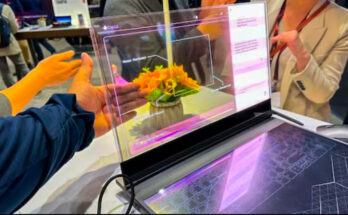
Lenovo introduced an innovative laptop concept featuring a transparent display screen, named the ThinkBook Transparent Display Laptop Concept, at the 2024 Mobile World Congress. This cutting-edge device boasts a 17.3-inch see-through Micro LED screen, a virtual keyboard, and an AI camera.

The transparent design of the Think Book allows users to view objects behind the screen, enabling augmented reality applications. The built-in AI camera can identify items placed behind the laptop and overlay relevant digital information on the screen.

The Micro LED display offers high Color saturation, exceptional contrast ratio, and brightness of up to 1,000 nits, promising superior image quality compared to transparent OLED alternatives. Lenovo envisions architects and artists benefiting from this design by sketching real-world environments visible through the display.

However, the concept has its limitations, such as a 720p resolution due to the transparency feature. Lenovo hinted at potential improvements in image quality in the future.

In addition to the ThinkBook Transparent Display Laptop Concept, Lenovo unveiled new laptops available for purchase. The ThinkBook 14 2-in-1 Gen 4, running Windows 11, features a 360-degree hinge for tablet mode, Intel Ultra Core CPUs, up to 64GB of RAM, and up to 2TB of storage, catering to high-end business users. Expected to launch in March, its starting price is $1,169.

Another notable release is the Lenovo ThinkPad X12 Detachable Gen 2, also operating on Windows 11. This notebook features a 12.3-inch IPS display that can detach from the keyboard, an Intel Core Ultra U CPU, up to 1TB of storage, up to 32GB of RAM, and a built-in kickstand. It is set to be released in April with a starting price of $1,399.

Lenovo also introduced its new T series of business laptops at MWC 2024. The T14 Gen 5, T14s Gen 5, and T16 Gen 3 models offer OLED screens, up to 64GB of RAM, and up to 2TB SSD storage. With a choice of Intel Core Ultra or AMD Ryzen 8040 processors, these laptops provide versatility for various user preferences. The T14 Gen 5 will launch in May 2024 at $949 for the AMD variant and in April 2024 starting at $1,199 for the Intel variant. The T14s Gen 5 and T16 Gen 3 will both launch in April 2024, priced at $1,399 and $1,219, respectively

Lenovo Unveils World’s First Transparent Laptop: Featuring a See-Through Screen, Glass Keyboard, and More Read More

Mumbai’s Tata Memorial Hospital Introduces ₹100 Tablet as Cost-Effective Solution for Chemotherapy Side Effects

Tata Memorial Centre’s (TMC)  Groundbreaking research reveals the effectiveness of low-dose Olanzapine in alleviating chemotherapy-induced vomiting, offering hope for improved cancer treatment with reduced side effects.

A recent study conducted at Tata Memorial Centre, Mumbai, has uncovered a cost-effective approach to managing chemotherapy-induced vomiting, a common side effect faced by cancer patients undergoing treatment.

The study, carried out at India’s largest cancer facility, TMC, suggests that a low dose of Olanzapine (2.5 mg) can effectively control vomiting triggered by chemotherapy in cancer patients.

Chemotherapy, an essential aspect of cancer treatment, often leads to nausea and vomiting. While Olanzapine, an antipsychotic medication, has shown efficacy in mitigating these side effects, the standard dosage (10 mg) is associated with excessive daytime sleepiness, limiting its widespread use.

Dr. Jyoti Bajpai, Professor of Medical Oncology at TMC and the lead researcher, highlights the significance of this discovery. Cancer-induced nausea frequently results in extended periods of sleep, disrupting patients’ daily lives, including work and school commitments. Dr. Bajpai emphasized in an interview with The Sunday Express that excessive daytime sleepiness poses challenges to productivity, attendance, and finances as patients struggle to meet employment and academic obligations.

To address this issue, the research team pursued innovative methods to mitigate these adverse effects. A large-scale Phase 3 trial evaluated the efficacy of low-dose Olanzapine (2.5 mg) compared to the standard dose (10 mg) over a 4-day period, alongside standard anti-vomiting drugs with reduced steroid content at TMC, Homi Bhabha National Institute.

The trial, conducted from February 9, 2021, to May 30, 2023, involved 267 patients aged 13–75 years undergoing chemotherapy, particularly those on regimens known to induce nausea and vomiting in solid tumor patients.

The primary objective was to compare the two groups for “complete control,” indicating no vomiting, no requirement for rescue medications, and either no or mild nausea throughout the 0–120 hours phase. The secondary safety objective focused on assessing daytime sleepiness.

Results revealed that 45% of patients in the 2.5 mg Olanzapine group achieved complete control, compared to 44% in the 10.0 mg group, demonstrating the non-inferiority of the 2.5 mg regimen. The marginal 1.0% difference indicates that the 2.5 mg treatment is equally effective as the 10.0 mg one.

Dr. Bajpai highlights this 1% difference as a favorable outcome for the lower dose, showcasing its non-inferiority. Published in the Lancet Oncology, the research paper suggests that low-dose Olanzapine not only exhibits equal efficiency in controlling chemotherapy-induced nausea and vomiting but is also associated with fewer side effects, including reduced daytime sleepiness.

This cost-effective breakthrough holds transformative potential for global healthcare, providing relief to countless patients grappling with chemotherapy-induced nausea and vomiting. The reduction in daytime sleepiness is particularly noteworthy, making low-dose Olanzapine a promising option for enhancing patients’ quality of life during cancer treatment. Further comprehensive studies are warranted to explore its applicability in conditions requiring steroid restriction, such as diabetes and other immunocompromised situations.

Mumbai’s Tata Memorial Hospital Introduces ₹100 Tablets as Cost-Effective Solution for Chemotherapy.


Mumbai’s Tata Memorial Hospital Introduces ₹100 Tablet as Cost-Effective Solution for Chemotherapy Side Effects Read More

NTA Announces CUET-UG 2024 Schedule: Hybrid Mode Exam from May 15-31, Results on June 30

The National Testing Agency (NTA) has released the schedule and exam details for the Common University Entrance Test-Undergraduate (CUET-UG 2024). The entrance exam, crucial for undergraduate admissions, will be conducted in a hybrid mode from May 15 to May 31, 2024, with results expected on June 30. CUET-UG 2024 will offer exams in 13 languages across 380 cities, including 26 cities abroad.

NEW DELHI: The National Testing Agency (NTA) has announced the online registration schedule for the Common University Entrance Test-Undergraduate (CUET-UG 2024) on Tuesday. Scheduled to take place from May 15 to May 31, 2024, CUET-UG 2024 results will be declared on June 30. Additionally, subject-wise dates for CUET-PG 2024, commencing from March 3, 2024, were also revealed by the agency on Tuesday.

Online registration for CUET UG 2024 opens on Tuesday (11:50 PM) and will remain open until March 26 (11:50 PM). A two-day correction window will be provided on March 28 and 29 (11:50 PM), with details regarding examination cities available from April 30, 2024.

Last year, around 14.9 lakh registrations were received for CUET-UG. As per a notification from NTA, CUET-UG 2024 will be conducted in a hybrid mode, allowing both computer-based and pen-paper testing. This overhaul aims to streamline the examination process and limit subject choices to six.

CUET-UG, introduced in 2022, offers a unified platform for students seeking admission to various universities and institutions across India. Detailed program information and eligibility criteria are available on respective university websites and https://exams.nta.ac.in/CUET-UG. Aspirants are advised to review eligibility requirements before selecting subjects for CUET-UG 2024.


This competitive exam will be available in 13 languages, including English, Hindi, Assamese, Bengali, Gujarati, Kannada, Malayalam, Marathi, Odia, Punjabi, Tamil, Telugu, and Urdu, and will be held across 380 cities, with an additional 26 cities outside India included in the exam centers.

Candidates have a wide range of choices, with 33 languages and 27 subjects to choose from. Each candidate can select any subject or language as per their preference and the requirements of their desired university or institution. The exam consists of 50 questions per language, and candidates need to attempt 40 out of 50 questions.

Candidates can opt for a maximum of six subjects or languages from the available options, which are divided into three sections. The General Test, comprising 60 questions, is applicable for admission to various undergraduate programs offered by universities. NTA advises candidates to choose at least one language and the General Test.

The duration of each test paper is generally 45 minutes, except for Mathematics/Applied Mathematics, Accountancy, Physics, Chemistry, Economics, Computer Science/Informatics Practices, and General Tests, which have a duration of 60 minutes. The exam will be conducted over multiple days, with two or three shifts depending on the number of candidates and subject choices.

CUET-PG 2024 exams are scheduled from March 11 to 28, with two shifts each day. The complete examination comprises 44 shifts, with each shift lasting for 105 minutes. CUET (PG) – 2024 will cover 157 subjects for 4,62,589 unique registered candidates, who will undergo 7,68,389 tests. Candidates have the option to choose a maximum of four test papers/subjects.

NTA Announces CUET-UG 2024 Schedule: Hybrid Mode Exam from May 15-31, Results on June 30 Read More

Indian Navy and NCB Seize 3,300 kg of Drugs off Gujarat Coast; Amit Shah Hails Historic Operation

In a collaborative effort between the Indian Navy and the Narcotics Control Bureau (NCB), a suspicious boat carrying approximately 3,300 kg of contraband was intercepted. This marks one of the most significant seizures in recent history in terms of drug quantity. The apprehension took place near the International Maritime Boundary Line off the Gujarat coast in the Arabian Sea..

NEW DELHI: The Indian Navy, in conjunction with the Narcotics Control Bureau, conducted a successful operation seizing a boat laden with nearly 3,300 kg of drugs, marking the largest seizure in recent times.

The confiscated drugs comprise 3,089 kilograms of charas, 158 kg of Methamphetamine, and 25 kg of morphine, as per a statement issued by the Indian Navy.

“Indian Navy, in a coordinated operation with the Narcotics Control Bureau, intercepted a suspicious dhow carrying almost 3300Kgs contraband (3089 Kgs Charas, 158 Kgs Methamphetamine 25 Kgs Morphine). This constitutes the largest seizure of narcotics, in terms of quantity, in recent times,” stated the Navy.

The suspicious vessel was intercepted near the International Maritime Boundary Line off the Gujarat coast in the Arabian Sea. Subsequently, the contraband, along with the apprehended boat and crew, were handed over to law enforcement agencies at an Indian port on February 27.

The interception was made possible through information provided by the P8I LRMR aircraft during a surveillance mission. A mission-deployed ship of the Indian Navy was redirected to intercept the suspicious dhow involved in contraband smuggling.

“The coordinated response of the #IndianNavy with Law Enforcement Agencies is reflective of our resolute stance against narcotics trafficking in #India’s maritime neighborhood,” stated the Indian Navy on social media platform X.

Union Home Minister Amit Shah lauded the Navy and NCB for their achievement, terming the joint operation a “historic success.”

“In a joint operation carried out by the NCB, the Navy, and the Gujarat Police, a gigantic consignment of 3132 kg of drugs was seized. The historic success is a testament to our govt’s unwavering commitment to making our nation drug-free. On this occasion, I congratulate the NCB, the Navy, and the Gujarat Police,” said Amit Shah.

Indian Navy and NCB Seize 3,300 kg of Drugs off Gujarat Coast; Amit Shah Hails Historic Operation Read More

PM Modi Unveils Names of Four Gaganyaan Mission Astronauts at ISRO Center in Kerala

Prime Minister Narendra Modi introduced the world to the four astronauts-elect chosen for the Gaganyaan mission: Group Captain Prashanth Nair, Group Captain Angad Prathap, Group Captain Ajit Krishnan, and Wing Commander Shubhanshu Shukla. All four, who were short-listed four years ago, are Indian Air Force (IAF) test pilots from the Aircraft and Systems Testing Establishment (ASTE) in Bengaluru.

Initially, a significant number of test pilots had volunteered for the astronaut program, with 12 making it past the first selection level completed in September 2019. After rigorous rounds of selection, the Institute of Aerospace Medicine (IAM) and Isro finalized the quartet.

The journey to this point has seen setbacks, including the omission of a previously indicated test pilot, Chavan. However, the focus remains on the achievements and dedication of the chosen four.

Isro chairman S Somanath highlighted the completion of significant projects on time, marking substantial additions to Isro’s infrastructure. These projects include the PSLV integration facility, semi-cryogenics integrated engine and stage test facility, and Trisonic wind tunnel.

The path to selection involved extensive training, including a stint in Russia, despite delays induced by Covid-19. The four astronauts-elect have been undergoing various training modules in India, supported by partnerships with multiple agencies and armed forces.

PM Modi emphasized the need for cooperation and support for the astronauts-elect, acknowledging their sacrifices and the challenges ahead. He reiterated India’s commitment to indigenization in the space sector, fostering scientific temper, and empowering women in STEM.

Furthermore, PM Modi outlined ambitious plans for India’s space exploration, including returning to the Moon, exploring Venus, establishing a space station by 2035, and sending an Indian astronaut to the Moon using indigenous spacecraft and rocket by the Amrit Kaal.

PM Modi Unveils Names of Four Gaganyaan Mission Astronauts at ISRO Center in Kerala Read More